
The Role and Skills Development of In-company Trainers in Development Cooperation
Downloads
Popular Topics
Downloads
Description
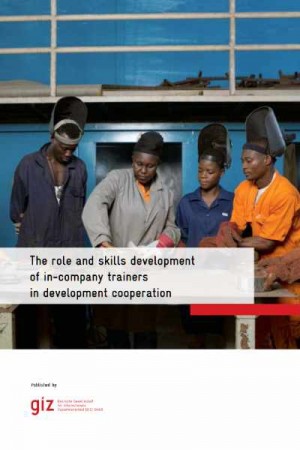
In Germany, close cooperation between the state and the private sector in TVET has been established. As places of learning, the interaction between schools and companies also shows this dual approach. To this end, the two types of teaching and training resources include: vocational school teachers (mostly provide the theoretical knowledge), and in-company training staff (provide practical training). Several developing countries take up and progress this dual system by adding more company-based training in their systems, making them an increasingly important role. Teaching and training staff play a fundamental role in designing labour market-oriented TVET and conducting reforms within TVET systems.
This guide contains crucial questions on the basic conditions and on the role, tasks and training of teaching and training staff in terms of development cooperation. This includes the legal foundations for TVET and the recognition of company-based training. Other important questions are, for instance, whether training is already offered at companies, how good the companies’ facilities are in a given country, how training is organised at vocational schools, and how coordination is established between schools and the private sector.